$lickWilly
New member
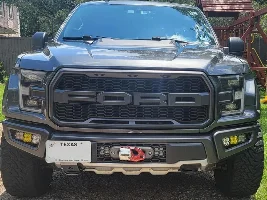
This is gorgeous rig....those BR's are perfect....You do realize that there are Tremor owners who have installed these, right? Yes, they do fit regardless of what Ford says on the website.
View attachment 17752
This is gorgeous rig....those BR's are perfect....You do realize that there are Tremor owners who have installed these, right? Yes, they do fit regardless of what Ford says on the website.
View attachment 17752
I have not argued with anyone in this thread Bannerman. I’m simply looking for a member that has experience install this kit on their truck.@Kverd88 what are you looking for here exactly? Ford Performance says it's not ideal. Are you wanting validation from some random guys on the internet that you should go against Ford's recommendation? It seems like you just want to argue about it....
Yes, you did say that in your first post.That's exactly what I stated in my first post on here and others gave and got similar responses from various manufacturers.
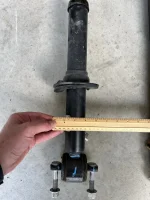
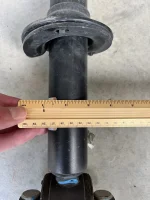
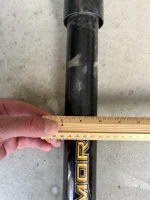
Ride quality is such an individual and vehicle preference. I personally like the ride of Fox over Bilstein and King is right in the same arena but only offer a mid speed adjustment. But comparing a 2.0” to a 2.65” is not apples to apples. The piston in the 2.65” is almost as big as the entire shock body of a 2.0”. The 6112’s are a great bang for the buck. You won‘t find a 2.5” that cheap. I couldn’t stand the factory ride of the Tremor, to soft with zero rebound dampening. And most love it and want to keep the ride. Only way to really know what you want is to drive a truck already equipped with the setup you are looking at or just go for it. As far as measuring the stock strut, I can when I get home. But it doesn’t really matter if it’s 2” or 4”, it rides like crap and I am in the minority with that statement.Yes, you did say that in your first post.
But I’d still like to hear feedback from Tremor owners who have actually installed this kit. That is why I asked very specific questions in my first post.
So far, I already talked with one Tremor owner who removed the Fox / Roush 2.0 shocks in place of this Bilstein / FP kit and prefers the ride quality.
I agree with your statements and I know ride quality is subjective. However, most drivers can tell if body roll is reduced, which is one of my specific questions.Ride quality is such an individual and vehicle preference. I personally like the ride of Fox over Bilstein and King is right in the same arena but only offer a mid speed adjustment. But comparing a 2.0” to a 2.65” is not apples to apples. The piston in the 2.65” is almost as big as the entire shock body of a 2.0”. The 6112’s are a great bang for the buck. You won‘t find a 2.5” that cheap. I couldn’t stand the factory ride of the Tremor, to soft with zero rebound dampening. And most love it and want to keep the ride. Only way to really know what you want is to drive a truck already equipped with the setup you are looking at or just go for it. As far as measuring the stock strut, I can when I get home. But it doesn’t really matter if it’s 2” or 4”, it rides like crap and I am in the minority with that statement.
Are your Kings OE replacement or custom built? The Bilsteins with their digressive valving will most certainly help with body roll. Kinda the entire purpose for it.I agree with your statements and I know ride quality is subjective. However, most drivers can tell if body roll is reduced, which is one of my specific questions.
Tremor suspension is floaty and soft feeling. I have King 2.5” shocks on my Ford Bronco, but that is not how I want my Tremor to ride. It’s chattery, you feel every bump in the road, but it’s an off-roader and soaks everything up in the dirt. It’s purpose built for that.
If you are able to measure the stock shocks for me, I appreciate that info for my own knowledge. Thanks!
Digressive shocks are not ideal for off pavement use, right?Are your Kings OE replacement or custom built? The Bilsteins with their digressive valving will most certainly help with body roll. Kinda the entire purpose for it.
The jeep crowd sure loves them for offroading.Digressive shocks are not ideal for off pavement use, right?
Digressive valving starts out with a heavier dampening at the top of the stroke. This helps with body roll and on asphalt performance. As the shock travels in the stroke the dampening actually get less or digresses. For a more controlled off road ride. Digressive shocks suck at small bumps and large bumps but excel in on road handling and G-outs. Makes for a livable daily driver shock. The 5 and 6 series entry level Bilstiens are all Digressive and most ICON's are. You have to move up to the 8+ series to get away from them.Digressive shocks are not ideal for off pavement use, right?
To his point most Jeeps don't travel at high speeds over large and small bumps. They disconnect their sway bars to get more flex while retaining some stability at the top of the stroke. As they drop off large ledges and take the big slow hit or G-out they can handle it.The jeep crowd sure loves them for offroading.
You and I have stated the same on 6112 over the Ford performance ones, yes the digressive valving works great for slow crawling offroad, which where I'm at is the most available kind, so digressive valving would be my preferred choice overall, but unfortunately the RC M1's are the only one that gets to the lift that I want, the icons come close, with that being said if when I do it nothing has changed I may just go with Halolift, if I catch wind Bilstein is going to be coming out with something I'll either wait or throw on the m1 for a period of time. I know RC has improved leaps and bounds but with the experience I have had with them in the past it makes it hard to even lean that way.Digressive valving starts out with a heavier dampening at the top of the stroke. This helps with body roll and on asphalt performance. As the shock travels in the stroke the dampening actually get less or digresses. For a more controlled off road ride. Digressive shocks suck at small bumps and large bumps but excel in on road handling and G-outs. Makes for a livable daily driver shock. The 5 and 6 series entry level Bilstiens are all Digressive and most ICON's are. You have to move up to the 8+ series to get away from them.
Progressive starts out soft at the top of the stroke and increase dampening as the shock travels through the stroke. It makes them good for small and big bumps, but you loose on road handling and G-out control.
Linear shocks the valving curve is more of a straight line. It stays consistent through the stroke. It's a better overall compromise between small and large hits, G-outs and handling. Add a High and Low speed compression adjuster and you're golden. As you can adjust for the small and big hits. Fox and King use linear valving and there is a reason they are at the top.
To his point most Jeeps don't travel at high speeds over large and small bumps. They disconnect their sway bars to get more flex while retaining some stability at the top of the stroke. As they drop off large ledges and take the big slow hit or G-out they can handle it.
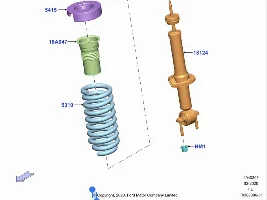
Anything is better than the factory strut and shocks. Well, maybe not the RC standard struts, the M1's, maybe and Vertex would be. I would probably go with a standard 6112 over the Ford tuned one, but that's just me.
King offer a kit for the Bronco. We use it for high speed off-roading mostly and trail riding. Very minimal crawling.Are your Kings OE replacement or custom built? The Bilsteins with their digressive valving will most certainly help with body roll. Kinda the entire purpose for it.
I would probably go with a standard 6112 over the Ford tuned one, but that's just me.
If I catch wind Bilstein is going to be coming out with something I'll either wait or throw on the m1 for a period of time. I know RC has improved leaps and bounds but with the experience I have had with them in the past it makes it hard to even lean that way.
Very nice reply. Thank you for taking the time.Digressive valving starts out with a heavier dampening at the top of the stroke. This helps with body roll and on asphalt performance. As the shock travels in the stroke the dampening actually get less or digresses. For a more controlled off road ride. Digressive shocks suck at small bumps and large bumps but excel in on road handling and G-outs. Makes for a livable daily driver shock. The 5 and 6 series entry level Bilstiens are all Digressive and most ICON's are. You have to move up to the 8+ series to get away from them.
Progressive starts out soft at the top of the stroke and increase dampening as the shock travels through the stroke. It makes them good for small and big bumps, but you loose on road handling and G-out control.
Linear shocks the valving curve is more of a straight line. It stays consistent through the stroke. It's a better overall compromise between small and large hits, G-outs and handling. Add a High and Low speed compression adjuster and you're golden. As you can adjust for the small and big hits. Fox and King use linear valving and there is a reason they are at the top.
To his point most Jeeps don't travel at high speeds over large and small bumps. They disconnect their sway bars to get more flex while retaining some stability at the top of the stroke. As they drop off large ledges and take the big slow hit or G-out they can handle it.
Anything is better than the factory strut and shocks. Well, maybe not the RC standard struts, the M1's, maybe and Vertex would be. I would probably go with a standard 6112 over the Ford tuned one, but that's just me.
Digressive valving starts out with a heavier dampening at the top of the stroke. This helps with body roll and on asphalt performance. As the shock travels in the stroke the dampening actually get less or digresses. For a more controlled off road ride. Digressive shocks suck at small bumps and large bumps but excel in on road handling and G-outs. Makes for a livable daily driver shock. The 5 and 6 series entry level Bilstiens are all Digressive and most ICON's are. You have to move up to the 8+ series to get away from them.
Progressive starts out soft at the top of the stroke and increase dampening as the shock travels through the stroke. It makes them good for small and big bumps, but you loose on road handling and G-out control.
Linear shocks the valving curve is more of a straight line. It stays consistent through the stroke. It's a better overall compromise between small and large hits, G-outs and handling. Add a High and Low speed compression adjuster and you're golden. As you can adjust for the small and big hits. Fox and King use linear valving and there is a reason they are at the top.
You've related the damping curve to position, but these values are velocity based. They are graphed in Force (lbs or N) X Velocity (In/Sec). So the curve is the same independent of where the shock is in the stroke, unless it's a bypass shock which does alter the damper curve at each bypass point (single, double, triple, etc).
Also good to note that while these are overlying themes for the style of damping, the curves can all kinds of slopes and values. You could design a digressive curve with a shallow knee and low slope that performs close to a linear curve with low and high speed compression adjusters. It's all in the margins]