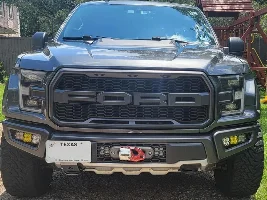
It's an ADD thing, when I'm going to or do buy something I Research the crap out of it. Found this extreamly interesting. Thought I should share. Makes me swing closer to thinking it's just the OEM Raptor, 2019 Limited Tune. That works for me.
But it also makes me question installing a Cold Air Intake.
Welcome to the Ford Racing Parts website. Offering quality aftermarket parts specifically engineered and designed for your Ford Powered vehicle.

performanceparts.ford.com
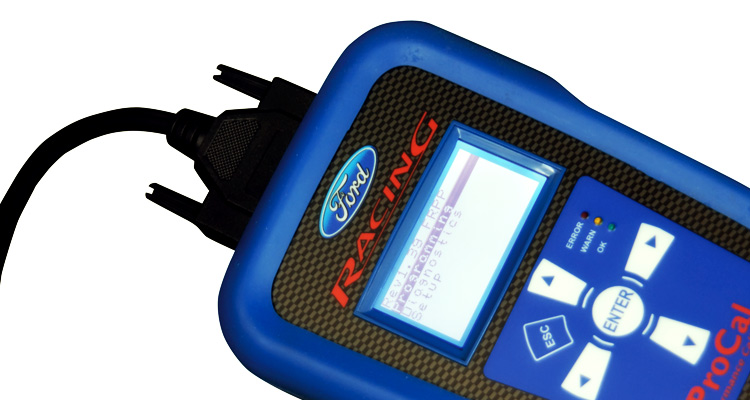
Powertrain Control Module calibration
There's also the matter of the engine's internal conditions, which are monitored and adjusted-for by the powertrain control module (and the way it's calibrated). Ford Performance calibrations, like Ford production calibrations, are developed with certain protections against damage, both short-term and long-term, caused by particular internal conditions – mainly heat.
One example is protection against overly hot catalyst temperatures, which can cause permanent damage. Without going into how it's done, a production PCM will continually calculate the hottest temperature in a catalyst, and if it exceeds a predetermined limit, the PCM will richen the A/F ratio to lower the exhaust gas temperature until the catalyst has cooled sufficiently. Of course a richer A/F ratio will also reduce power output.
So what? Well, suppose a car – a supercharged production vehicle with production calibration – is driven to a dyno facility and a run is performed immediately, resulting in a reading of 420 hp. Then a part is swapped out for a "high-performance" version and the car run again; the reading is 430 hp. The high-performance part is worth 10 hp, right? Wrong. In this hypothetical example, the dyno operator was not monitoring A/F ratio, so didn't know that in the first run, with the engine fully up to temperature, the catalyst protection function kicked in, richened the A/F ratio, and reduced power output. In the second run, the engine had cooled enough that the catalyst protection wasn't needed and the A/F ratio remained optimal. So the results were misleading; it wasn't an apples-to-apples comparison.
That example may be trivial, but it shows how vital the essential data input is to getting correct results. In this case, if the A/F ratio had been monitored, the discrepancy would have been immediately apparent.
Similarly misleading results can be caused by a failure to keep inlet air temperature constant between runs. As inlet air temperature increases, the PCM will retard spark timing to prevent detonation, lowering power output.
Some aftermarket cold-air kit manufacturers claim enormous power gains using nothing but their kit and a production calibration. Most of these claims are not supported with A/F, inlet temperature, or spark advance traces during the dyno pulls shown in their advertising.
In some cases, the apparent increase in power is because the mass air flow sensor transfer function in the PCM is left stock. With the new the cold-air kit flowing more air, the stock PCM will not "know" about the extra air that's entering the engine, causing an A/F ratio that is leaner than it should be for durability. This can produce more power, but it also can be damaging to catalysts, exhaust valves, piston rings, and other engine components. The commanded spark advance can also be incorrect, and result in detonation or pre-ignition with potentially catastrophic results.
Some aftermarket tuners do a few "tricks" that Ford Performance does not recommend, such as:
- Turning off the catalyst, oxygen sensor and exhaust valve temperature protection logic. This can result in more power under certain conditions, but the downside is drastically decreased durability of these expensive components.
- Advancing spark timing to potentially unsafe levels that can cause spark knock or pre-ignition. So the answer to the opening question is, some power increase claims are based on poor and misleading dynamometer test practices. Others are genuine but at the expense of engine, catalyst, or drivetrain durability. Even driver safety is sometimes overlooked for horsepower.
Ford Performance calibrations
Ford Performance tests its calibrations extensively, in a wide range of conditions. The engineers take extreme care to provide as much power and torque as can be safely delivered, and also to deliver high durability and exceptional drivability. In the area of automatic transmission calibration, they generally make extensive changes to improve shift quality and give the transmission a more performance-oriented feel, without compromising durability.
Most other companies do not have the time or resources to test to the extent Ford Performance does. Some don't realize they need to do it at all!
"We have a lot of customers wanting a 600 hp blower kit," says Dennis Gomes, "but when they learn that Ford Performance's 400 hp kit can be installed and they can keep the factory warranty – it's easy. Also, you can put Ford Performance calibrations on a Mustang and it will pass emissions, no problem."
In fact, all Ford Performance kits are 50 state emissions legal and many are offered with a warranty. Customers can be sure of a quality product that will continue to deliver improved performance over the long term.